Want to grow your app in emerging markets? Start with pricing.
Apps that succeed in regions like India, Indonesia, and Bangladesh understand one thing: local economic realities matter. A $10 subscription might work in the U.S., but in these markets, it could be a week’s discretionary income. The key is tailored pricing models that balance affordability with revenue potential.
Here’s what works:
- Economy Pricing: Low prices drive mass adoption but require high user volume.
- Penetration Pricing: Start cheap to attract users, then increase prices once they’re hooked.
- Premium Pricing: Focus on affluent users willing to pay for quality.
- Regional Pricing Optimization: Adjust prices to local purchasing power.
- Freemium/Hybrid Models: Offer free access with paid upgrades to convert cautious users.
Companies like Netflix, Adobe, and others have used these strategies to boost revenue by up to 40% in emerging markets. Tools like Mirava simplify the process by automating price adjustments based on local conditions.
Bottom line: The right pricing strategy can help you grow globally without alienating price-sensitive users.
Global Pricing Strategies: Key Overview
1. Economy Pricing for Mass Market Penetration
Economy pricing is all about making your app the most budget-friendly option out there. The idea is simple: keep prices low to attract a large audience, and make up for thinner profit margins with sheer volume. It's a strategy that works well in markets where affordability is a top priority.
This approach resonates strongly with users in emerging markets like India, Indonesia, and Bangladesh, where price sensitivity is high. Many users in these regions rely on affordable smartphones with limited data, making even small subscription fees seem out of reach.
Take The New Yorker, for example. They’ve nailed this concept by offering weekly digital subscriptions for just $1 per week[3]. This ultra-low price point removes financial barriers, encouraging more people to subscribe and creating a strong foundation of paying customers.
This kind of affordability can open doors to massive market potential, especially in regions where price is a deciding factor.
Target Audience Reach
Economy pricing is a gateway to reaching audiences that might otherwise never consider paying for an app. In many emerging markets, disposable incomes are much lower than in developed countries, even as the middle class continues to grow. People in these regions are eager to use quality apps, but only if the price aligns with their tight budgets. This strategy is particularly effective for apps that focus on essential services, where practical functionality outweighs the need for premium features.
Revenue Growth Potential
Instead of relying on high margins per user, economy pricing aims to generate revenue by attracting a larger user base. The logic is straightforward: more users at a lower price can still lead to significant overall revenue. Plus, a bigger audience creates opportunities to upsell premium features, cross-sell other services, and gather valuable insights into user preferences.
Here’s an example: one Asian mobile operator saw its average price per minute drop by 80% in a hypercompetitive market. But by combining targeted pricing with value-added services, they managed to reverse their revenue decline and expand their distributor network by over 20% in just a year[2].
That said, keeping costs low while maintaining profitability requires operational efficiency and smart planning.
Suitability for Emerging Markets
Emerging markets are a natural fit for economy pricing because affordability drives most purchasing decisions. Users in these regions face challenges like lower incomes, fluctuating currencies, limited access to premium payment methods, and infrastructure issues such as slower internet speeds and older devices. Offering the lowest price in your category, optimizing your app for low-end devices, and supporting local payment methods can break down many of these barriers. In competitive markets where price wars are common, being the cost leader can give you a big edge.
Implementation Complexity
Putting an economy pricing strategy into action isn’t as simple as slashing prices. It requires careful planning and ongoing adjustments. Start by conducting in-depth market research to understand local user preferences, competitive pricing, and what people in each region consider affordable. For example, calculating how much of a user’s monthly income a subscription would cost can help you find the sweet spot between affordability and sustainability.
Technical optimization is equally critical. Your app needs to perform well on budget Android devices with limited RAM and processing power, and it should use as little data as possible. Additionally, real-time monitoring tools are essential. Dashboards that track conversion rates, user acquisition costs, retention, and regional revenue per user allow you to adapt quickly to market changes like currency fluctuations.
Tools like Mirava () can simplify this process by automating regional pricing adjustments. Instead of manually tracking exchange rates and purchasing power across multiple markets, platforms like this help you set competitive, locally relevant prices while saving time and providing valuable insights.
2. Penetration Pricing for Rapid User Acquisition
Penetration pricing is a strategy that starts with offering low prices to quickly attract users, with the plan to gradually increase them once a strong market presence is established. Unlike economy pricing, which keeps costs low indefinitely, this approach is temporary and aimed at breaking into new markets or customer bases. It’s particularly effective in emerging markets, where users may hesitate to try out new apps due to unfamiliarity or cost concerns.
This method works well in highly competitive markets, especially where price sensitivity is high. By setting an affordable price upfront, you lower the barrier for adoption, creating the momentum needed to stand out against competitors. Netflix provides a great example of this strategy in action. When it launched in Bangladesh in 2016, the company introduced a Mobile Plan priced at approximately $3.99 per month (BDT 338/month), significantly lower than its global rates. Similarly, Netflix offers plans in India and Indonesia for as little as $2.99 per month, compared to $6.99 in the U.S. and Western Europe [3]. This aggressive pricing allowed Netflix to gain a foothold in markets where higher costs would have been a dealbreaker.
The key difference between penetration pricing and economy pricing lies in its temporary nature. The goal isn’t to maintain low prices forever but to use them as a stepping stone to build a loyal user base before transitioning to higher price points.
Target Audience Reach
Penetration pricing is highly effective in reaching a broad audience quickly. By offering a lower price for a limited time, you can attract users who might otherwise hesitate to pay the standard rate. This approach is particularly useful in markets where consumers are open to switching to more affordable options. Acting quickly to capture market share gives you an edge over competitors.
As your user base grows, the app’s value often increases due to network effects. Features like social interactions or user-generated content become more appealing, creating a cycle that attracts even more users. Combining penetration pricing with targeted promotions tailored to specific regions or demographics can significantly boost adoption rates. This strategy not only helps reverse revenue decline but also expands distribution channels effectively.
Revenue Growth Potential
While penetration pricing may not deliver immediate profits, it focuses on building long-term value. The idea is to prioritize gaining users early on, with the understanding that a larger user base opens doors for future monetization. Once you’ve established a strong presence, you can gradually raise prices, introduce premium plans, or offer additional services to increase revenue.
However, transitioning to higher prices needs to be handled carefully. Users who joined during the low-price phase might resist paying more unless they see clear added value. Transparent communication about new features or benefits can help smooth this process.
Suitability for Emerging Markets
Emerging markets are particularly suited to penetration pricing due to their unique challenges: high price sensitivity, limited disposable income, and fierce local competition. This strategy is especially effective in industries like fintech, edtech, and healthtech, where early adoption can secure market leadership before the sector becomes more saturated.
Regional pricing plays a critical role here. For instance, Adobe Creative Cloud costs $59.99 per month in the U.S. but is offered at $22.45 per month in India and $23.43 per month in Singapore (when billed annually) [3]. Flat global pricing often fails in such markets because it doesn’t account for differences in local purchasing power. By combining penetration pricing with region-specific adjustments, companies can address these challenges directly.
Implementation Complexity
Executing a penetration pricing strategy requires careful planning and data analysis. Testing different price points across user segments is crucial. For example, A/B testing can reveal how conversion rates and lifetime value compare between a $2.99 per month plan in India and Indonesia versus a $6.99 plan in the U.S. and Western Europe [3].
Real-time performance tracking is essential for monitoring metrics like user acquisition costs, retention rates after price changes, and overall revenue growth. These insights help determine the best time to shift from introductory pricing to standard rates.
One of the biggest hurdles is managing the transition to higher prices without losing a significant portion of your users. It’s also important to maintain enough capital to support lower initial revenues while growing your market share. Pricing too low can lead to unsustainable operations, making it harder to invest in product development or improvements [7].
Tools like Mirava () can help streamline this process by automating regional pricing adjustments. These tools factor in local purchasing power and currency fluctuations, ensuring your app remains competitively priced in each market while maximizing user acquisition and revenue potential.
3. Premium Pricing for Differentiated Value
While low-cost strategies aim to attract price-conscious users, premium pricing appeals to those who value exceptional quality over affordability. Instead of racing to the bottom on price, this approach sets higher rates by offering standout features, a superior user experience, or unique capabilities that competitors can't easily replicate. For this to work, your app must deliver on its promises, backed by significant investment in development, design, and functionality. And just as important - you need to clearly communicate why your app is worth the extra cost.
The idea is straightforward: you’re offering something distinct and valuable. Users willing to pay premium prices care about quality, performance, and exclusivity more than saving a few dollars. In emerging markets, this might seem counterintuitive given the general price sensitivity. However, even in these regions, there are affluent segments ready to pay more for products that deliver genuine value.
Unlike penetration pricing, where low prices are used temporarily to build market share, premium pricing is a long-term strategy. It relies on consistently delivering top-tier quality. Any lapse in quality can erode trust and damage your premium image. This approach is ideal for targeting a niche audience that prioritizes quality and is willing to pay for it.
Target Audience Reach
Premium pricing naturally focuses on a smaller, more specific audience compared to mass-market strategies. But these users often generate much higher revenue per person. In emerging markets, your ideal customers include professionals, entrepreneurs, and tech-savvy individuals with higher disposable incomes who prioritize quality over cost.
Certain app categories are especially suited to premium pricing. For example:
- Fintech apps with advanced tools and features
- Productivity apps offering exceptional design and functionality
- Business applications that deliver measurable results
Early adopters are another key group for premium pricing. These users are often eager to pay for cutting-edge features or innovative products. Apps in sectors like edtech and healthtech, which deliver tangible results or superior experiences, can charge premium rates, especially when compared to free or budget alternatives.
However, willingness to pay varies widely by region. Users in the U.S. and Western Europe are generally more open to premium pricing than those in regions like India or Latin America. Additionally, iOS users tend to generate higher average revenue per user (ARPU) than Android users, making platform-specific pricing strategies a smart move.
Revenue Growth Potential
Premium pricing can yield impressive revenue per user, even with a smaller customer base, and works well as part of a broader portfolio strategy. The key is identifying and targeting users with higher purchasing power and a willingness to pay. While emerging markets are often seen as price-sensitive, they also include affluent segments willing to invest in quality.
For instance, a McKinsey study on an Asian mobile operator found that shifting to targeted pricing strategies, including premium tiers for high-value customers, reversed declining revenues and reignited growth in just 12 months [2]. This underscores that premium pricing is about more than just charging more - it’s about capturing value from users who truly benefit from your app’s standout features.
Take apps like Tony Robbins AI, which charges $99 per month. This success stems from a clear value proposition that resonates with its audience, who recognize the differentiation and are willing to pay the premium. Timing is also crucial - introducing premium offers after users achieve specific goals or see success can significantly boost acceptance rates.
Premium pricing works best when combined with a tiered approach. Offering multiple tiers - such as a free or budget option for price-sensitive users, a mid-tier for general users, and a premium tier for advanced features - enables you to reach diverse market segments while maximizing revenue potential. This approach creates a more balanced and sustainable revenue stream.
Suitability for Emerging Markets
Emerging markets come with unique challenges for premium pricing, but they also offer opportunities. These markets are far from uniform; they include diverse income levels and user groups with varying willingness to pay.
Premium pricing works especially well in status-driven niches or for products that stand out as innovative. Apps that deliver cutting-edge AI capabilities, exclusive content, or unmatched performance can justify higher prices when the value is clear and difficult to replicate.
Localization is key when implementing premium pricing in these regions. Users are more likely to pay a premium if they feel the product is tailored to their needs. This can include translated content, culturally relevant features, and user interfaces adapted to local preferences. Localization should also extend to payment methods, customer support in local languages, and compliance with local regulations.
Price localization adjustments are another crucial factor. For example, Adobe Creative Cloud maintains its premium positioning globally but adjusts pricing based on regional affordability. In India, it charges $22.45 per month, compared to $59.99 in the U.S., making the product accessible while preserving its premium image [3].
When combined with other strategies like economy and penetration pricing, premium pricing completes a well-rounded approach to capturing value across different segments. Success in emerging markets depends on building a perception of quality and exclusivity. A strong brand image, reliable performance, and continuous upgrades are essential to justify the higher price.
Implementation Complexity
Rolling out a premium pricing strategy isn’t simple - it requires careful market segmentation and advanced pricing analytics. Investing in technology to monitor pricing effectiveness, user behavior, and competitive dynamics across regions is essential.
A/B testing is a must. Experiment with different price points for various user groups and analyze metrics like conversion rates, lifetime value, and retention. Starting with a higher price and lowering it later tends to work better than the reverse, as users are more resistant to price hikes.
Real-time dashboards can help you track key metrics such as:
- Conversion rates (percentage of users upgrading to premium)
- Average revenue per user (ARPU)
- Lifetime value (LTV) of premium users
- Churn rates
- Overall revenue growth
One major challenge is maintaining the quality and innovation needed to justify premium pricing. This requires ongoing investment in product development and feature improvements.
Payment infrastructure can also be a hurdle, especially in emerging markets where access to credit cards or digital payments may be limited. Supporting alternative payment options like mobile wallets or local payment networks can help overcome this barrier.
Clear communication is critical for premium pricing success. You need to articulate why your app is worth the higher price. Highlight what sets it apart - whether it’s advanced features, superior performance, exclusive content, or enhanced security. Transparency about benefits, such as ad-free experiences or priority customer support, helps users see the value.
Tools like Mirava () can simplify regional pricing optimization by automating adjustments based on local purchasing power and currency fluctuations. This ensures your app remains competitive in each market while maintaining its premium image and maximizing revenue.
sbb-itb-43fe43a
4. Regional Pricing Optimization
Building on earlier pricing strategies, regional pricing optimization tailors your app's cost to reflect the realities of local markets.
This approach involves setting app prices based on users' geographic locations. Instead of applying a flat rate worldwide, you adjust prices to align with local purchasing power, currency values, and what people in each region can afford. For instance, while a $10 app might seem reasonable in the U.S. or Western Europe, it could be unaffordable for users in countries like India, Indonesia, or Bangladesh.
By using data to guide these adjustments, regional pricing allows you to expand your reach and maximize revenue across diverse markets. The challenge lies in finding a price point that feels fair to users while ensuring your business remains sustainable.
Target Audience Reach
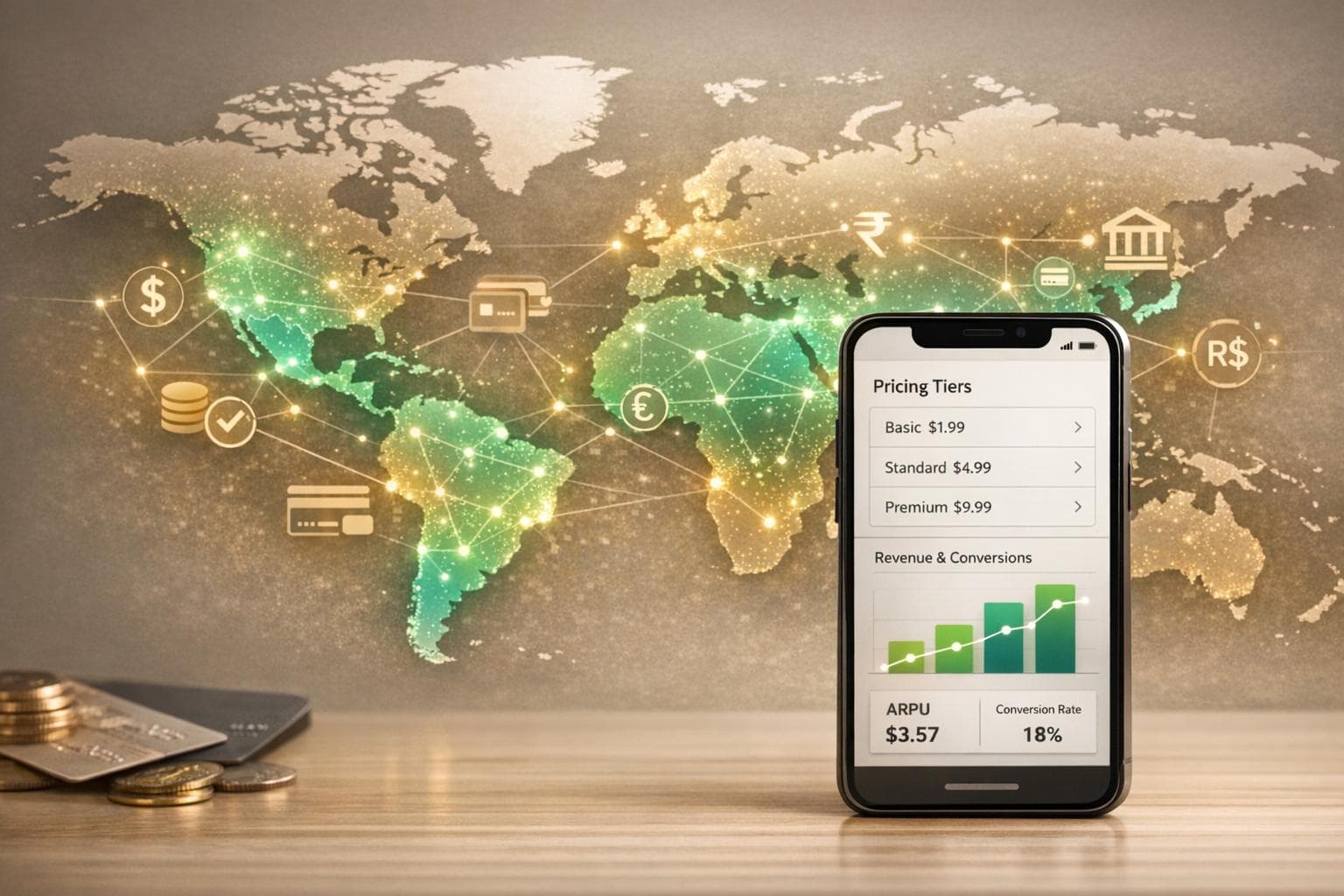
Regional pricing significantly broadens access to your app. By segmenting users based on location and economic capacity, you can convert potential customers who might otherwise skip your app due to cost. For example, users in emerging markets like India or Indonesia might pay $2.99 per month, while those in the U.S. or Western Europe pay $6.99 per month. Both groups enjoy the same app experience, but the pricing reflects their distinct financial realities.
This strategy not only makes your app more accessible but also fosters a diverse, global user base. When people feel they're paying a fair price, they're more likely to stick around as loyal subscribers and recommend your app to others.
Regional pricing is particularly effective for subscription-based models, especially in markets where disposable income is limited but demand for digital tools is high. Industries like fintech, productivity software, streaming services, and educational platforms often see great results with this approach. By addressing price as a barrier, you create opportunities for growth while ensuring your app remains viable in each market.
Revenue Growth Potential
Adjusting prices regionally can unlock substantial revenue growth by converting users who might otherwise never pay. Instead of earning nothing from price-sensitive markets, you capture revenue that adds up across various regions. The results can be impressive.
Apps that shift from a single global price to willingness-to-pay pricing often see meaningful gains in both conversion rates and global revenue. These gains highlight how effectively regional pricing can capture value across different markets.
This approach works by attracting more users in price-sensitive regions, fostering long-term relationships through fair pricing, and maximizing revenue in areas with higher purchasing power. A/B testing different price points across regions can help refine your strategy, ensuring you find the sweet spot for each audience [3].
Rather than relying on a one-size-fits-all price, regional pricing allows you to balance revenue streams across markets. By capturing value from diverse regions, you create a more resilient and sustainable business model that doesn't depend too heavily on any single geographic area.
Suitability for Emerging Markets
Emerging markets are where regional pricing often proves most effective. These regions are marked by significant differences in income levels, purchasing power, and price sensitivity. Users in these areas are often highly price-conscious, and global pricing models may simply not work for them.
Take Adobe Creative Cloud as an example. The company uses regional pricing based on country income data. In the U.S., subscriptions start at $59.99 per month, but in India, they cost $22.45 per month, and in Singapore, $23.43 per month (billed annually) [3]. This approach respects local economic conditions while maintaining profitability.
Emerging markets also come with unique challenges, such as limited access to high-end devices and inconsistent internet connectivity. These factors influence how much users are willing to pay. Conducting surveys and focus groups can help you understand these markets better, enabling you to set prices that align with local realities [6].
Regional pricing also positions you competitively against local players who often have a deeper understanding of regional economics. By showing sensitivity to local purchasing power, you build trust and loyalty. Users appreciate companies that recognize their financial constraints rather than imposing uniform pricing.
For best results, combine regional pricing with other localization efforts. Translate your app into local languages, include features that resonate with the local culture, and support popular regional payment methods. This comprehensive approach ensures your app feels relevant and valuable to users in emerging markets.
Implementation Complexity
While regional pricing offers clear benefits, implementing it requires careful planning and the right tools. Managing multiple price points across currencies and payment systems, while staying compliant with local regulations, can be challenging. You'll need dynamic pricing systems that account for real-time currency fluctuations and competitive conditions.
Start with thorough market research to understand local purchasing power and competition. Use economic models to predict how pricing changes will impact your business performance [2]. Real-time dashboards can help you monitor pricing effectiveness and respond to market shifts [2].
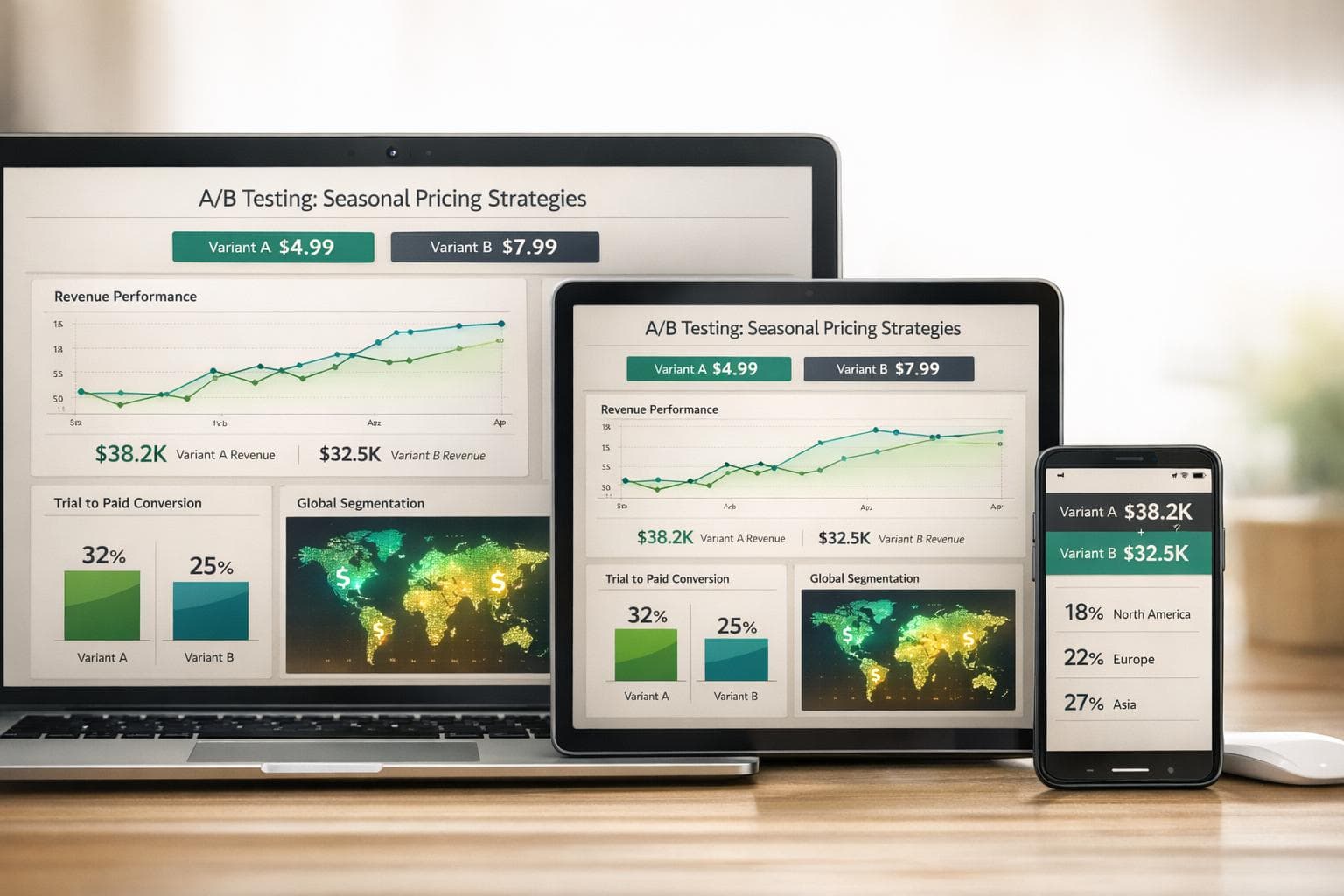
A/B testing is an essential step. Experiment with different price points in various regions to see what works best. Analyze metrics like conversion rates and lifetime value to fine-tune your strategy [3]. This approach helps identify the optimal price range - neither too low nor prohibitively high - for each market [4].
Payment infrastructure can also pose challenges, particularly in regions where credit card usage or digital payment access is limited. Offering alternative payment methods like mobile wallets or local payment networks can help overcome these barriers. Partnering with local organizations can also provide valuable insights and help navigate regulatory hurdles [6].
Platforms like Mirava () simplify the process of regional pricing optimization. They offer features like purchasing power parity (PPP)-adjusted pricing for over 175 countries, batch updates, revenue impact previews, and A/B testing tools. These solutions save time and help ensure your app remains competitively priced without the manual effort of managing countless price points.
5. Freemium and Hybrid Models for Emerging Markets
Freemium and hybrid models are all about combining free access with optional paid upgrades. The idea is simple: let users download and use your app for free, while offering premium features or advanced tools for those willing to pay. This approach is particularly effective in emerging markets, where users may hesitate to spend money upfront without first seeing the app's value. These models work hand-in-hand with economy and penetration pricing strategies, helping to attract users who might otherwise avoid committing financially.
The freemium model focuses on building a large user base through free access, then converting a portion of those users into paying customers by offering premium upgrades. Hybrid models take this a step further by mixing different monetization strategies, such as freemium access combined with subscriptions, ad-supported content, or one-time purchases. This approach broadens your reach while creating opportunities to convert free users into paying customers.
Target Audience Reach
Freemium and hybrid models are game-changers when it comes to expanding your audience. By removing the barrier of upfront payment, you can attract users who might otherwise skip your app. This strategy is especially effective in price-sensitive regions like India, Indonesia, and Bangladesh, where users are often cautious about spending money on apps they haven’t tried.
Offering a free version allows users to experience your app without risk, building trust and engagement. Once they see the value firsthand, they’re more likely to upgrade to premium features. Even if individual payments are smaller than in developed markets, the sheer volume of users can generate significant revenue.
Revenue Growth Potential
In emerging markets, where purchasing power is often lower, freemium and hybrid models drive revenue by focusing on volume and conversion rates. A large base of free users can be transformed into paying customers, creating substantial overall income.
Hybrid models also offer multiple revenue streams. For example, free users can generate ad revenue, while premium subscribers contribute through recurring payments, and in-app purchases add another layer of income. This diversified strategy helps reduce reliance on any single revenue source, making your business more stable.
The challenge is striking the right balance between free and premium offerings. The free version needs to provide enough value to attract users, but the premium features must offer clear, compelling benefits - like removing ads, unlocking advanced tools, or accessing exclusive content.
Suitability for Emerging Markets
Freemium and hybrid models are particularly well-suited to the dynamics of emerging markets. These regions often have high price sensitivity, varying income levels, and users who are cautious about spending money on digital products [3][5][6]. By letting users try your app before paying, you build trust and demonstrate value - key factors in markets where your brand may be unfamiliar or where digital purchases are viewed with skepticism.
Flexibility is another strength of these models. Many users in emerging markets prefer smaller, more frequent payments, such as weekly subscriptions, over larger, monthly commitments. By offering multiple pricing tiers and payment options, you can make your app accessible to a broader audience.
Take Adobe Creative Cloud as an example. The company offers significantly lower subscription rates in developing countries, charging $22.45 per month in India compared to $59.99 in the United States. They use AI to monitor user behavior, suggesting relevant tools and adjusting pricing tiers to retain users and reduce churn [3].
Freemium and hybrid models also allow for localization, tailoring pricing, payment methods, and features to fit regional economic conditions. This ensures your app remains accessible while still generating revenue.
Implementation Complexity
Implementing freemium and hybrid models requires careful planning and robust technology. First, you need to clearly differentiate between free and premium tiers. The free version should offer enough value to attract users, but not so much that they see no reason to upgrade. Premium features must provide tangible benefits that justify their cost.
Payment systems can be a challenge in emerging markets. Many users lack access to credit cards, so you’ll need to support alternative methods like mobile money, carrier billing, and local payment gateways [3]. Offering these options is crucial for converting free users into paying customers.
A/B testing is another essential component. For example, you might test whether a $2.99 monthly subscription converts better than $3.99, or evaluate how pricing impacts lifetime value. Key metrics to track include free-to-paid conversion rates, revenue per paying user, and churn rates across pricing tiers [3][8]. Data analytics can help you identify which features drive conversions and which keep users engaged, enabling continuous improvements.
Localization is about more than just translating text. It involves tailoring pricing, payment methods, and even the app’s design to meet the needs of specific regions. For example, optimizing for low-end devices and minimizing data usage can make your app more appealing in areas with limited connectivity.
Platforms like Mirava () simplify the process of managing regional pricing. They offer tools for purchasing power parity-adjusted pricing across 175 countries, batch updates, and A/B testing. This allows you to focus on refining your strategy rather than juggling countless price points.
As your app matures, you may need to adjust your pricing model. For instance, you might transition from freemium to subscription-based models once you’ve built a loyal user base. Or, if users show a willingness to pay for an ad-free experience, you could move from ad-supported models to premium subscriptions. Any changes should be communicated clearly to maintain trust, especially in price-sensitive markets.
Comparison Table
Selecting the right pricing strategy for emerging markets involves balancing key factors like user reach, revenue potential, alignment with local conditions, and execution complexity. Each strategy has its own strengths and trade-offs.
Below is a comparison of five pricing strategies: economy pricing, penetration pricing, premium pricing, regional pricing optimization, and freemium/hybrid models. This table provides a side-by-side view to help you identify the approach - or combination of approaches - that best suits your app's goals and target markets. It complements the in-depth analysis covered earlier in this guide.
| Pricing Strategy | Target Audience Reach | Revenue Growth Potential | Fit for Emerging Markets | Implementation Difficulty |
|---|---|---|---|---|
| Economy Pricing | Very high - appeals to mass-market users focused on affordability. Works well in competitive categories where price drives decisions. | Moderate - relies on high volume to offset low margins. Sustainable only if overhead costs stay extremely low. | High - perfect for price-sensitive regions where users prioritize affordability, especially in competitive markets. | Low - relatively simple to execute once costs are optimized, though maintaining profitability at low price points is tricky. |
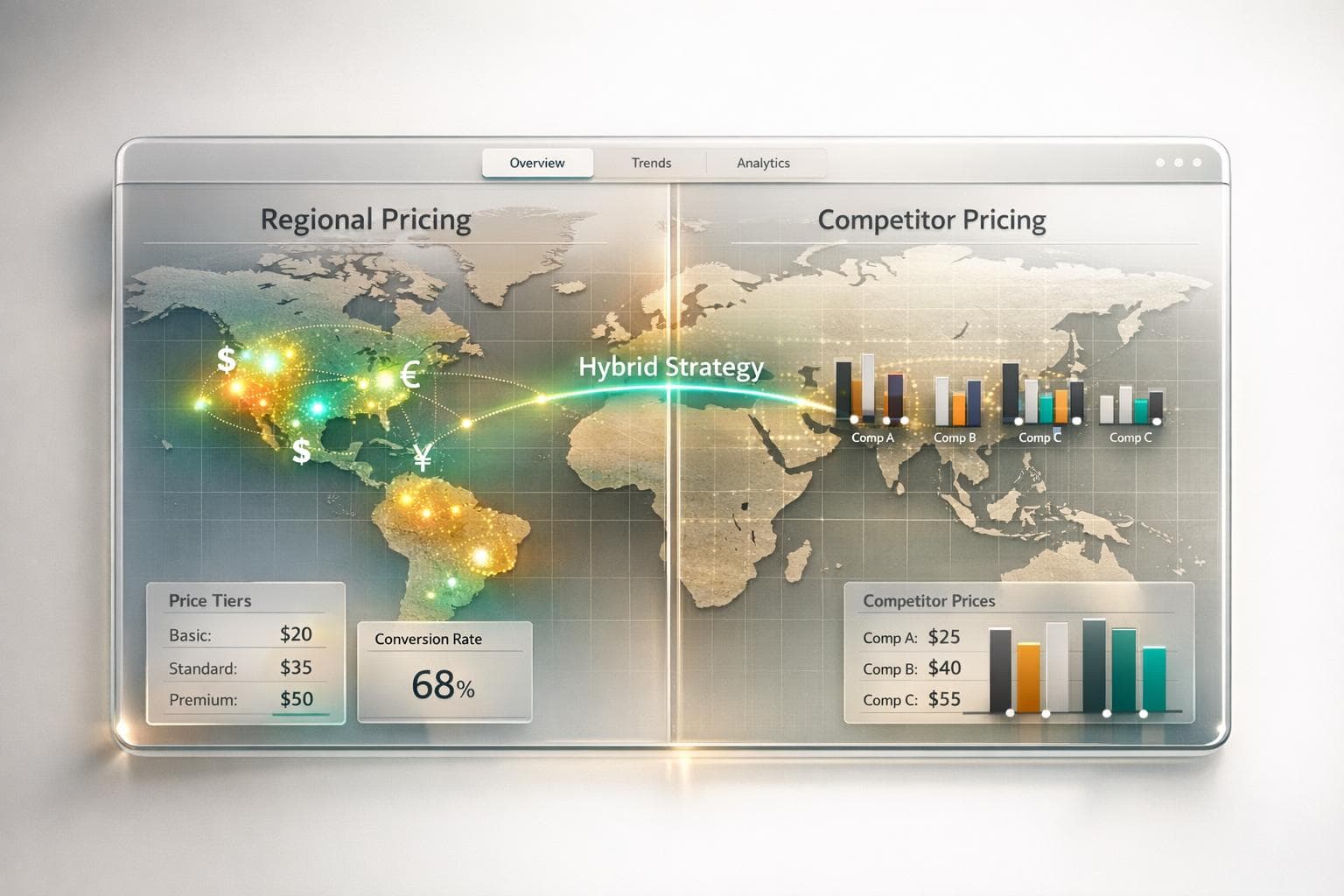
| Penetration Pricing | Very high - removes price barriers to quickly acquire users, a major advantage in highly competitive environments. | High - enables rapid growth with strong conversion rates. Revenue rises as prices increase after building a loyal user base. | Excellent - highly effective for services like ridesharing, food delivery, and streaming, where low introductory prices attract users. | Low - straightforward as a short-term strategy, but timing price increases is critical to retaining users. |
| Premium Pricing | Low to moderate - targets affluent users and early adopters seeking differentiated value, representing a smaller segment in emerging markets. | Moderate to high - maximizes revenue per user from premium segments while enhancing brand value, though broader adoption may be limited. | Moderate - works for niche segments like premium fintech or healthtech apps aimed at urban, high-income users. | Moderate - requires strong branding and clear differentiation to justify higher prices. |
| Regional Pricing Optimization | Very high - adjusts prices based on local purchasing power, making apps accessible across diverse economic conditions. | High - improves conversion in price-sensitive markets while maintaining higher prices where feasible. Purchasing power parity strategies boost results. | Excellent - essential for addressing local affordability, currency fluctuations, and pricing mismatches in emerging markets. | High - complex due to currency conversions, varied payment methods, and compliance. Platforms like Mirava simplify this process. |
| Freemium/Hybrid Models | Very high - removes upfront payment barriers, attracting users who prefer to try before buying. Builds a large user base in price-sensitive regions. | Moderate to high - generates steady revenue through conversions and diverse income streams like ads, subscriptions, and in-app purchases. | Excellent - ideal for markets where users want to test value before committing financially, fostering trust and long-term engagement. | Moderate - requires a strong balance between free and premium features, plus robust local payment systems. |
The data highlights key trends. Penetration pricing and freemium models are highly effective for reaching large audiences in emerging markets, as they minimize financial risk for users. Regional pricing optimization strikes a balance between reach and revenue by tailoring prices to local conditions. While premium pricing can strengthen brand positioning in niche segments, it often struggles to gain traction in price-sensitive regions.
Execution complexity also varies. Economy and penetration pricing are relatively easy to implement, making them appealing for startups with limited resources. Regional pricing optimization, while powerful, requires advanced tools to handle multiple price points across countries. Apps using platforms like Mirava have successfully implemented localized pricing quickly, yielding immediate results in emerging markets. Freemium models, though flexible, demand careful planning around feature differentiation and payment infrastructure.
Many successful apps combine strategies to maximize their impact. For instance, they might start with penetration pricing to build a user base, then shift to regional optimization as they scale. Alternatively, freemium models with regionally adjusted premium tiers can help apps grow while addressing diverse market needs. These approaches align seamlessly with the broader strategies discussed earlier.
Conclusion
Tailoring pricing strategies to fit local market conditions is a must for thriving in emerging markets. Approaches like economy, penetration, premium, regional, and freemium pricing cater to the unique challenges and opportunities in these high-growth regions.
Your initial pricing is just a starting point - a hypothesis. The real key lies in continuously refining it through data-driven experiments and adjustments[9]. Crafting a strong pricing model means balancing three elements: the market landscape, the value your app delivers, and how users actually behave[9].
For global apps, regional pricing adjustments aren't just helpful - they're critical. A $10 subscription might seem reasonable in the U.S. or Western Europe, but in countries like India, Indonesia, or Bangladesh, it could be far out of reach[3]. Emerging markets often reflect a much lower willingness to pay compared to developed ones, making localized pricing an essential strategy[9].
Successful apps rarely stick to just one pricing model. Instead, they combine multiple strategies. For instance, you could pair competitor-based pricing with localized adjustments or mix tiered models with penetration tactics[9]. One common path is to start with penetration pricing to attract users, then shift to regional optimization as your app scales. Alternatively, freemium models can be enhanced with region-specific premium tiers, ensuring you capture value across diverse market segments. By aligning pricing with local economic realities, you can maximize both growth and revenue.
Of course, managing pricing across more than 170 countries can be overwhelming. This is where tools like Mirava come in. Mirava simplifies regional pricing by streamlining adjustments and reducing errors. It uses real willingness-to-pay data for each country, psychological pricing techniques, and benchmark insights from platforms like Apple, Netflix, Spotify, and YouTube. With a unified dashboard, it consolidates pricing across iOS and Android, flags inconsistencies, and offers actionable, data-based recommendations.
Strategies like Purchasing Power Parity (PPP) pricing and tier mapping help teams align prices with what users in each market can realistically pay, which can lift conversion in price-sensitive regions.
Emerging markets represent enormous potential, but success hinges on pricing that reflects local economic realities. By prioritizing data-driven pricing optimization, you can secure market share and unlock sustainable revenue growth in these rapidly evolving regions.
FAQs
What’s the best way to choose a pricing strategy for my app in an emerging market?
To determine the best pricing strategy for your app in an emerging market, it's essential to consider factors such as currency fluctuations, local purchasing power, and market competition. Adjusting your pricing to reflect these elements ensures your app stays affordable for users while still driving revenue.
Leverage tools specifically created for regional pricing adjustments. These tools simplify the process of setting prices that match local economic conditions, helping you avoid the pitfalls of overpricing or underpricing. By doing so, you can remain competitive and position your app for steady growth in these rapidly changing markets.
What challenges might arise when using a penetration pricing strategy in highly price-sensitive markets?
Implementing a penetration pricing strategy in areas where price sensitivity is high comes with its own set of hurdles. One major concern is that pricing your app too low might send the wrong message about its value, making it tough to raise prices later without alienating users. On top of that, slim profit margins can become unsustainable, especially if operating costs increase or market dynamics shift.
There's also the risk of competitors retaliating with aggressive price cuts, potentially sparking a price war that eats into profits across the board. Add to this the challenges posed by local purchasing power and currency fluctuations, which can directly affect how well your strategy performs. Striking the right balance between keeping prices affordable and meeting long-term revenue goals is critical to navigating these challenges effectively.
How does optimizing regional pricing ensure both affordability for users and profitability for app developers in different economies?
Optimizing regional pricing allows app developers to balance affordability for users with profitability by adjusting prices to match local economic conditions. This method takes into account key factors like purchasing power parity (PPP), currency exchange rates, and competitive pricing trends to establish prices that are fair and accessible for each market.
By tailoring app pricing to reflect regional affordability, developers can broaden their global audience, attract more users, and boost revenue - all without risking overpricing or undervaluing their offerings in any specific region.