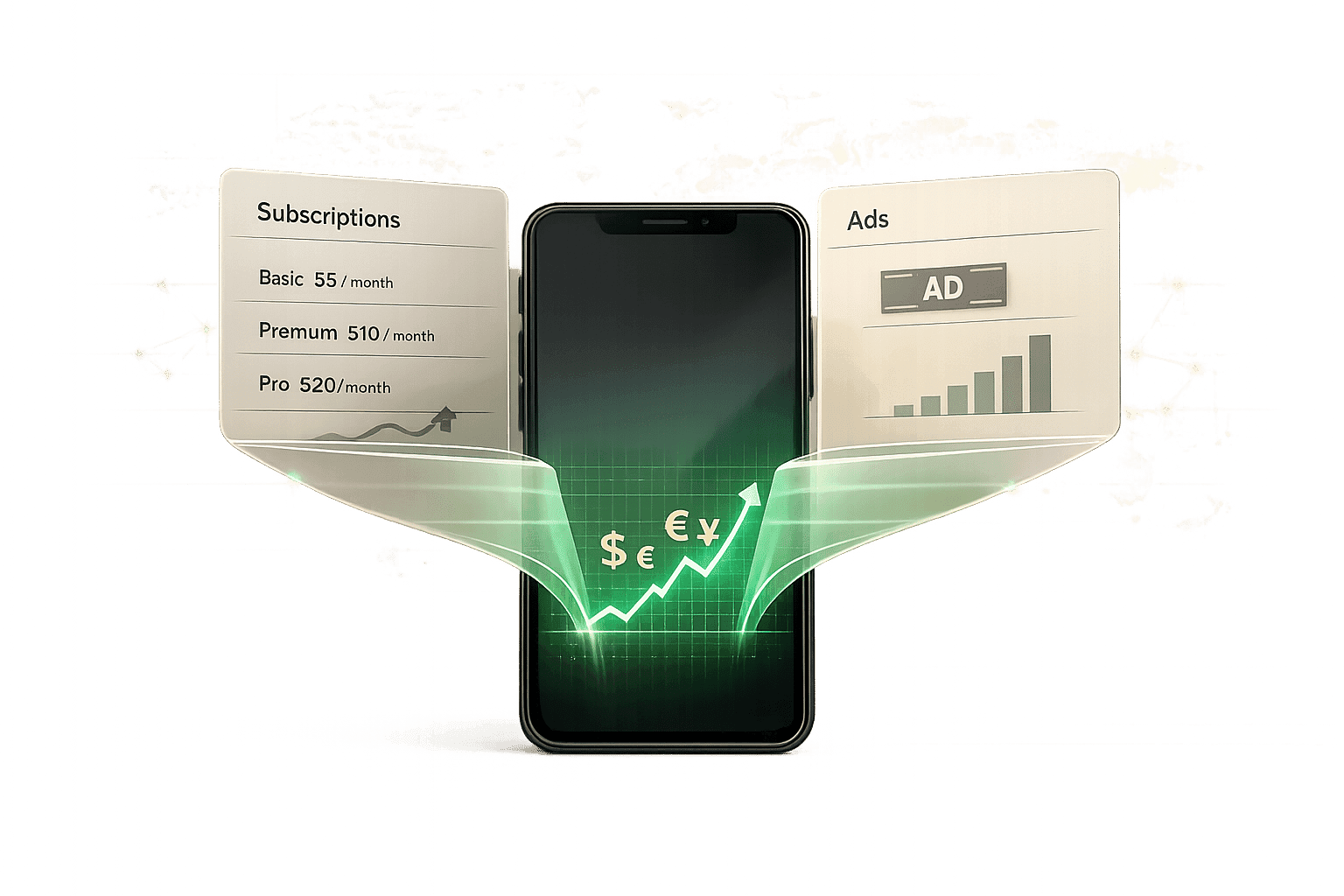
Hybrid monetization combines two or more revenue streams, usually subscriptions, in-app purchases, and ads, inside a single app, so it earns from paying and non-paying users at once. A pure subscription or IAP model only makes money from the small share of users who buy. A hybrid stack adds ad revenue on top of that, which turns the large non-paying majority into income without pushing them toward a paywall they were never going to cross.
This guide breaks down how the stack fits together, how to balance ads against in-app purchases without hurting retention, and when hybrid earns more than a single model. If the base model is not settled yet, start with how to monetize an app.
What Is Hybrid Monetization?
Hybrid monetization is the strategic combination of multiple revenue streams, subscriptions, in-app purchases (IAPs), and integrated ads, within a single app. Historically an app relied on either a subscription and IAP model or an ad-based one. A hybrid approach bridges the two, using the strengths of both.
The reason it has taken hold is simple math. In most apps only a small minority of users ever pay through subscriptions or IAPs, which leaves the large majority generating no revenue at all. Hybrid monetization unlocks value from those non-paying users through ads while keeping the experience clean for the ones who do pay. If subscriptions are the core of your stack, it's worth picking the right subscription pricing model before you layer ads and IAP on top.
The Core Components of Hybrid Monetization
To implement a high-performing hybrid monetization strategy, it's essential to balance user experience with revenue optimization. Here are the key components to consider:
1. Segmenting Users
Understanding your user base is the foundation of hybrid monetization. Not all users behave the same way, and identifying distinct user segments - such as paying versus non-paying users - enables tailored strategies.
- Paying Users: These users are willing to pay for the premium experience, such as ad-free content or exclusive features. Avoid disrupting their experience by limiting ads.
- Non-Paying Users: Use ads strategically to monetize this group without overwhelming them with a poor user experience.
2. Choosing the Right Ad Formats
Ad formats should complement the app’s user flow and aesthetic. The key is to avoid intrusive ads that disrupt engagement. Examples of effective ad formats include:
- Rewarded Ads: These provide users with something of value - such as extra lives in a game or a premium feature - after they view an ad. Rewarded ads often enhance engagement and retention.
- Interstitial Ads: These are full-screen ads that appear at natural pauses in the user experience, such as between levels or episodes.
- App Open Ads: These monetize splash screens during app launches but should be deployed carefully to avoid frustrating users.
- Native Ads: Seamlessly integrated into the app’s UI, native ads feel less disruptive and can help preserve user experience.
3. Timing and Placement of Ads
The placement and timing of ads are crucial to maintaining user satisfaction. For example:
- Avoid showing ads during the onboarding process for new users.
- Use "natural stops" in the app flow to introduce interstitial or native ads, such as between content transitions or after completing a task.
- For high-frequency users, consider progressively ramping up ad exposure based on session count.
4. Testing and Optimization
A critical part of hybrid monetization is testing and iterating. Run A/B tests to determine the best ad formats, placements, and frequency for your audience. Use tools like Google Analytics or Firebase to measure key performance indicators (KPIs) like retention, session length, and user lifetime value (LTV).
5. Ad Quality Matters
Poor-quality ads can negatively impact user retention. Ads with deceptive close buttons, forced redirects, or prolonged interruptions lead to user frustration and churn. Prioritize user-first ad designs that allow smooth interactions and provide clear controls for closing ads.
Real-World Success: Drama Shorts and Hybrid Monetization
A notable example of hybrid monetization in action is seen within the growing trend of drama shorts, particularly in the Asia-Pacific (APAC) region. These apps offer serialized video content, similar to TikTok but focused on episodic storytelling.
Let’s take the example of a hypothetical user journey:
- Day 1: Gabby, a new user, watches a free episode of a drama series.
- Day 2: Gabby returns to the app and is shown interstitial ads between episodes. She remains hesitant about subscribing.
- Day 7: Hooked on the content, Gabby finally subscribes. All ads are removed except for optional rewarded ads that she can engage with for bonus content.
- Day 30: Gabby decides to cancel her subscription but continues to occasionally use the app for free episodes. Ads are reintroduced to monetize her ongoing engagement.
By strategically balancing subscription and ad-supported revenue, the app maximizes both Gabby’s retention and its earnings.
Best Practices for Hybrid Monetization
To implement hybrid monetization effectively, follow these industry best practices:
1. Maintain Balance Between Revenue and User Experience
Avoid bombarding users with ads, especially during their first interactions with the app. Aim for a harmonious experience where monetization feels natural, not intrusive.
2. Leverage Data-Driven Insights
Use analytics tools to segment users and tailor monetization strategies based on behavior, location, and demographics. Personalized approaches often yield higher LTV.
3. Embrace Emerging Trends
Stay informed about industry trends and experiment with innovative formats like rewarded ads or app open ads. For example, the drama shorts trend highlights how niche content can pair seamlessly with hybrid monetization.
4. Focus on Ad Quality
Incorporate high-quality, non-disruptive ads that respect user expectations. Ensure ads are easy to close and avoid practices like forced redirects or deceptive buttons.
5. Retain Users Within Your Ecosystem
If you manage multiple apps, use cross-promotion to drive engagement across your portfolio. For example, redirect users from one app to another through in-app ads to prolong their lifetime value.
Key Takeaways
- Hybrid Monetization Maximizes Revenue: By combining subscriptions with ad-supported models, apps can tap into both paying and non-paying user segments.
- Segment Your Users: Tailor monetization based on user behavior, such as limiting ads for subscribers and carefully integrating ads for non-paying users.
- Ad Placement Matters: Use natural pauses in user flows for ad integration, and avoid overwhelming the first-time user experience.
- Test and Iterate: Continuously measure KPIs like LTV, retention, and session length to optimize your monetization strategy.
- Prioritize Ad Quality: Low-quality ads lead to churn; invest in user-first ad designs to preserve retention and satisfaction.
- Capitalize on Emerging Trends: Explore innovative strategies like drama shorts or rewarded ads to stay ahead in the market.
Conclusion
Hybrid monetization represents the future of app revenue strategies, offering a balanced approach to converting both paying and non-paying users into valuable contributors to your bottom line. By focusing on data-driven segmentation, ad quality, and user experience, developers and monetization managers can unlock new revenue streams while fostering sustainable growth.
The hybrid approach is more than a trend. It is how apps aiming to scale globally protect revenue as user behavior and platform economics shift. On the subscription and IAP side of that stack, purchasing power parity pricing keeps those price points realistic as you expand into new regions, and structuring subscription tiers properly keeps the paying segment from ever feeling stuck. With the right tools, testing, and strategies, your app can thrive in the hybrid monetization era.
Source: "Hybrid monetization strategies for subscription apps" - SubHub by Adapty, YouTube, Jan 1, 1970 - https://www.youtube.com/watch?v=0LTIqlAkSS0